- Role
- Lead product designer
- Focus
- Explainable AI and guided setup
- Period
- Concept to MVP
- Delivery
- Interaction model and reusable patterns
Measurement note: Where quantitative outcomes are shown, they are rounded portfolio-reported project metrics and are not presented as independently audited company disclosures.
My role & scope
I led product design from concept through MVP across problem framing, the interaction model, AI explainability, prototyping and reusable system decisions.
Challenges
The primary challenge was building user trust in a new, autonomous technology. Prediction markets are already complex. Adding layers of “black-box” AI agents and blockchain architecture created a high barrier to entry for the average user.
The key hurdles were:
- Simplify AI Training: The process of "training an AI" had to make sense to non-technical users who wanted faster, clearer decision support.
- Build Trust: Users were skeptical, so the AI's performance had to be transparent and its actions understandable.
- Design for Versatility: One interface had to handle fast-moving markets as different as sports, crypto and global events.
- Enable Speed: The design had to let users review time-sensitive picks quickly without hiding confidence, return context, or decision risk.
Key UX Methodologies
These are the UX methods I leaned on, and why:
- Jobs-to-be-Done (JTBD): This was the guiding framework. Users were not "hiring" the product to configure an AI; they were hiring it to make faster, better-informed decisions with less effort, without obscuring uncertainty or encouraging impulsive action. That job informed every design decision and kept the focus on outcomes rather than features.
- Progressive Disclosure: This is what lowered the barrier to entry. It turned “training an AI” into a short, step-by-step flow in plain language with presets. Users always know where they are and why, which lowers drop-off at setup.
- Lean UX & Iterative Sprints: We ran the project from concept to MVP in short sprints. With a product this new, that was the only sensible way to work. We got a working version in front of users quickly, tested the core assumptions and adapted to what people actually did rather than to internal guesses.
- Mental Model Alignment: The design process focused on using plain language and smart defaults. By avoiding technical jargon ("Epochs," "Learning Rate") and instead using simple explanations, the system was designed to match the user's mental model of "making a good pick," not a data scientist's model of "building a neural network."
The Process
I led the design from concept to MVP, focusing on the core user flows and a system that could scale and stay easy to use.
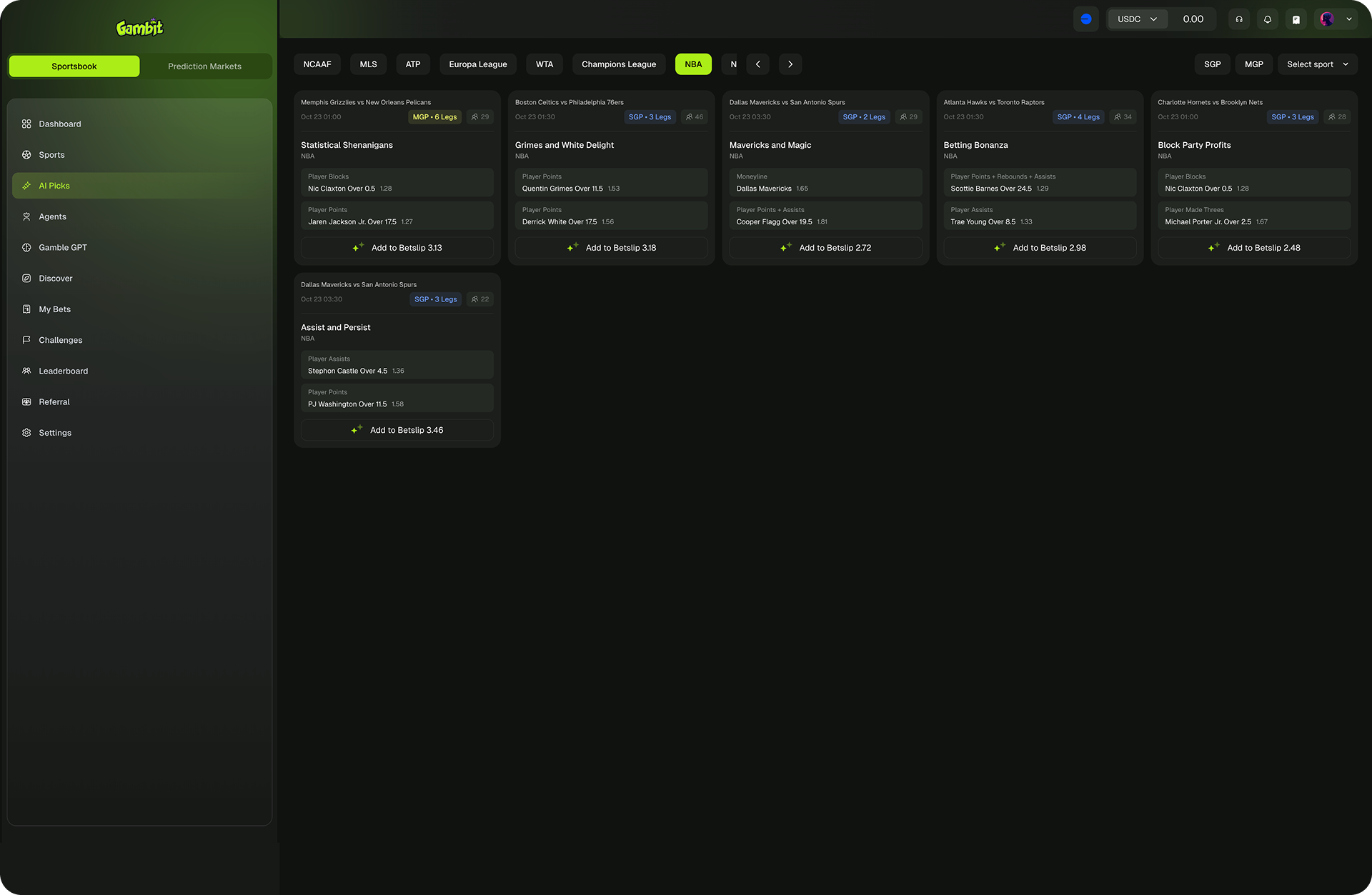
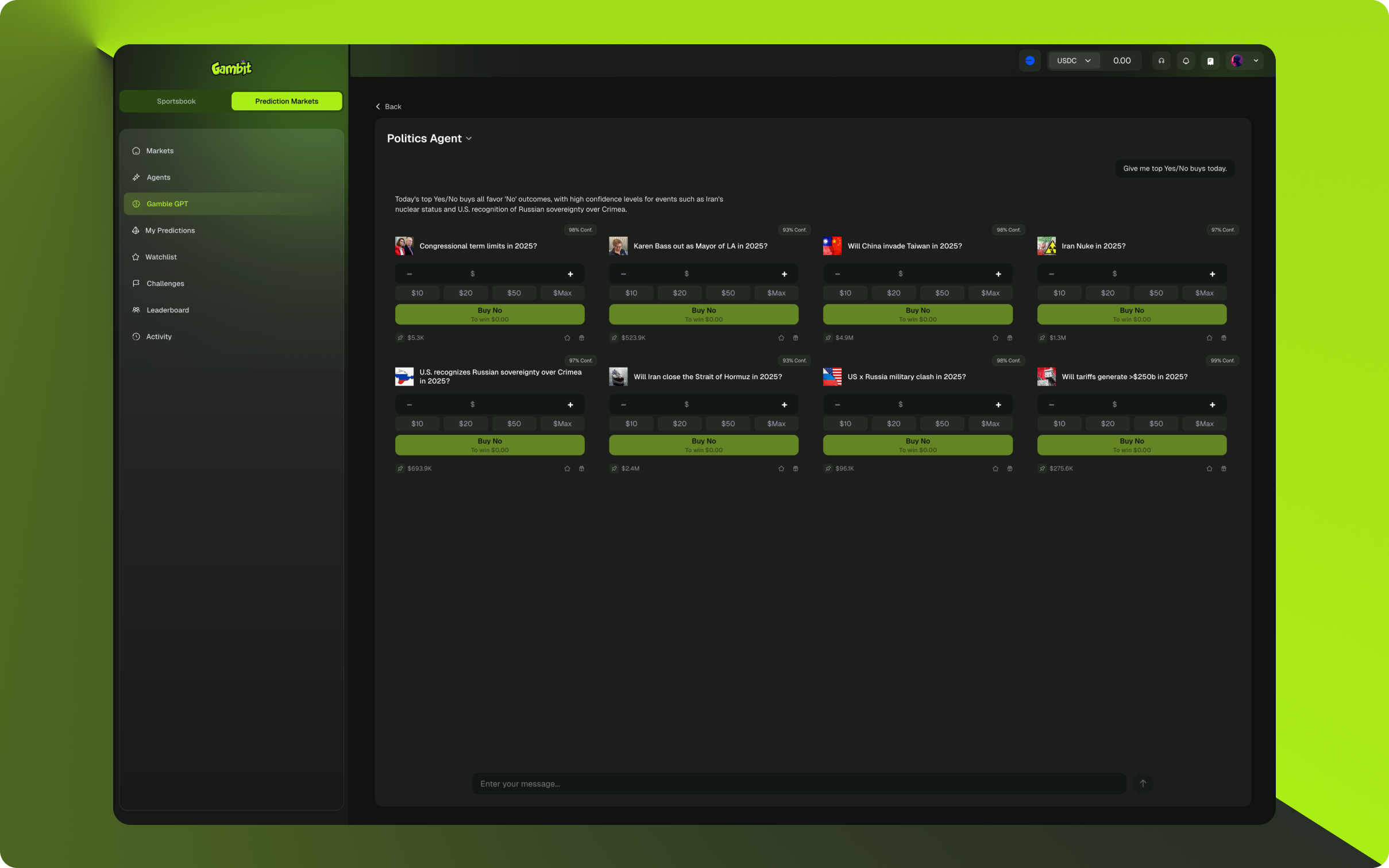
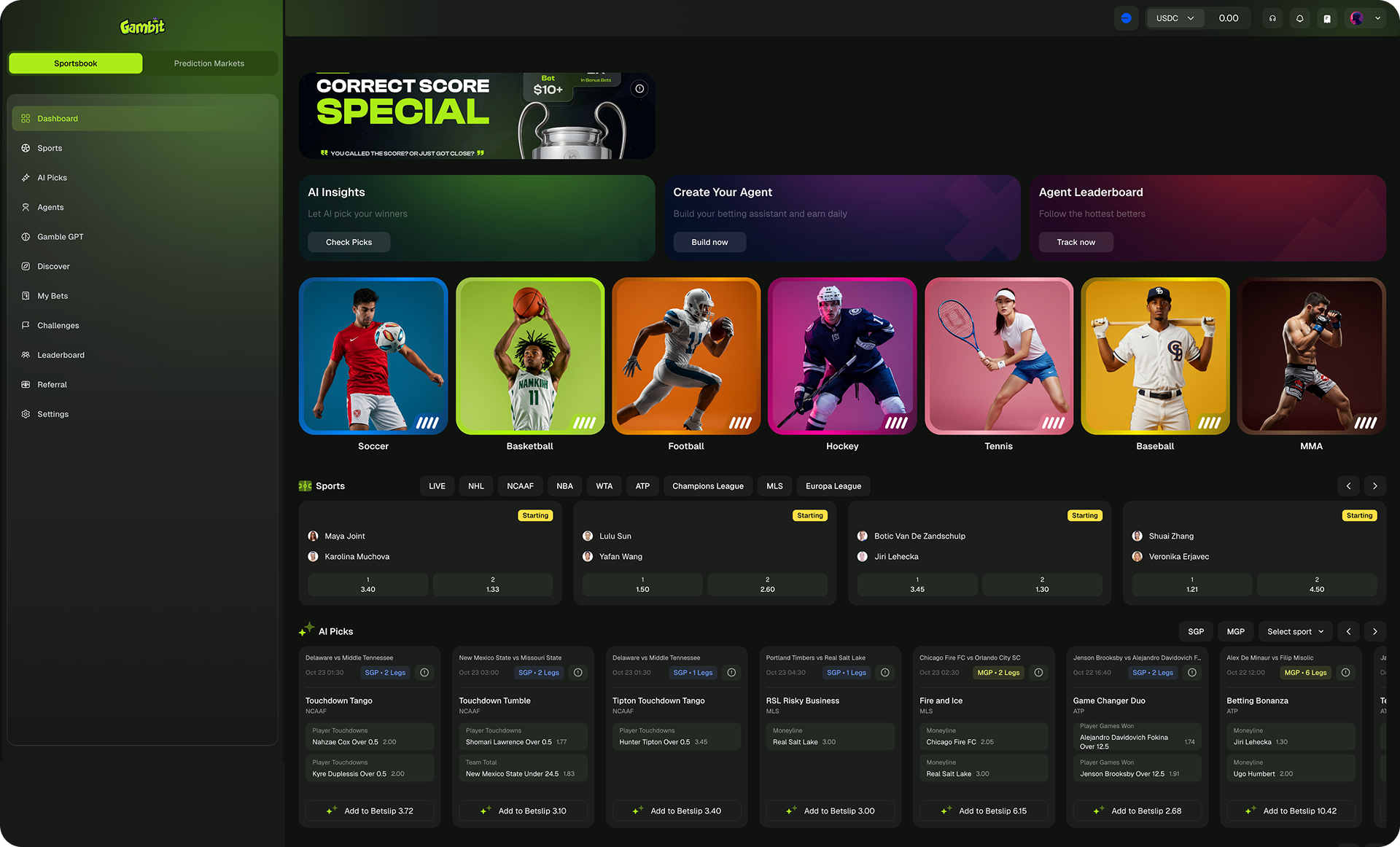
- Homepage as a Decision Surface: The dashboard works as a "decision surface" rather than a generic landing page. It answers the user's first question, “What should I do today?”, by surfacing AI-generated picks with clear confidence signals, return context and a deliberate review path.
- Guided Agent Creation: The agent setup was rebuilt as a clear, step-based flow. It uses smart defaults, plain-language explanations, and light progress cues so users always understand where they are in the process and why each step matters.
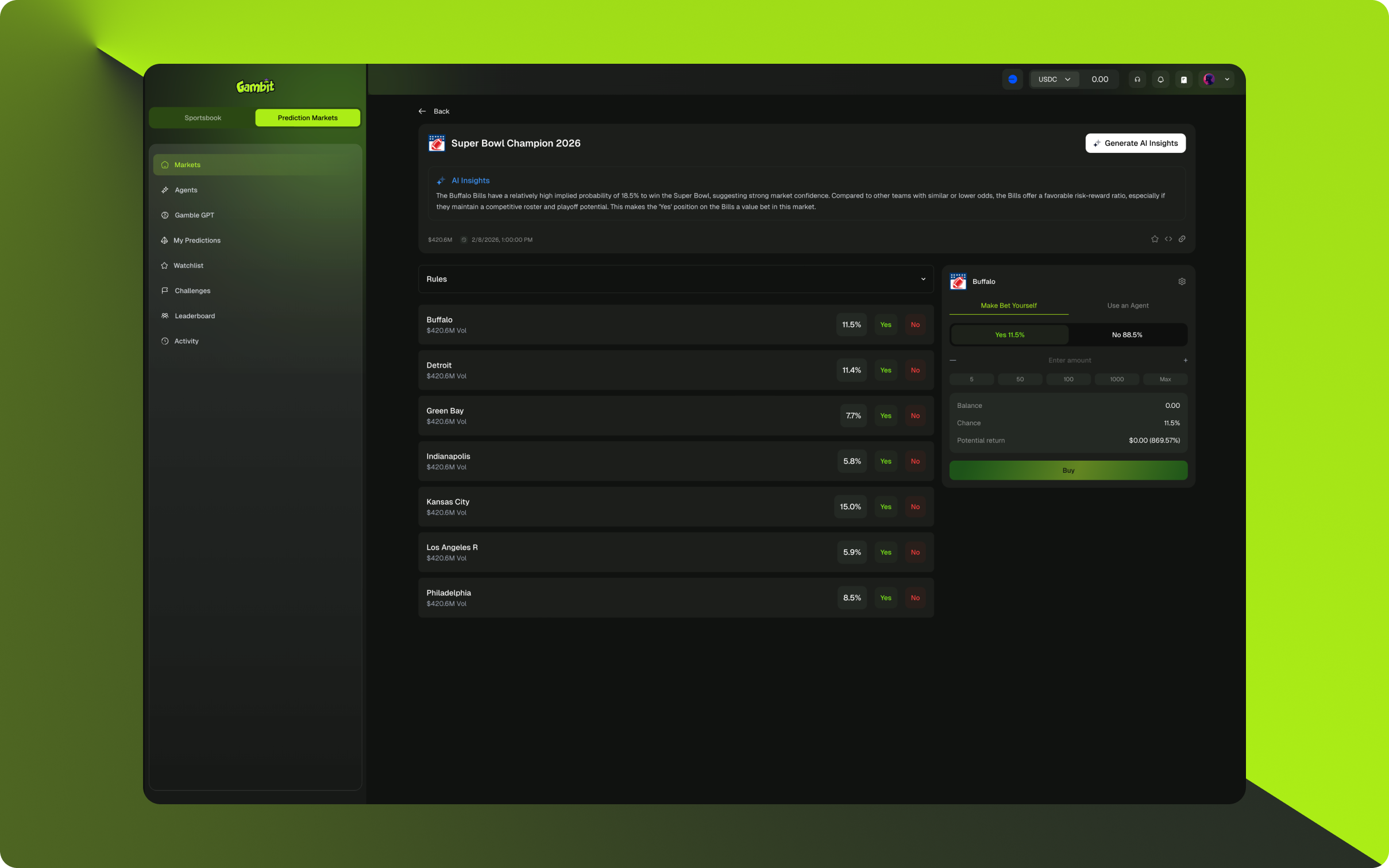
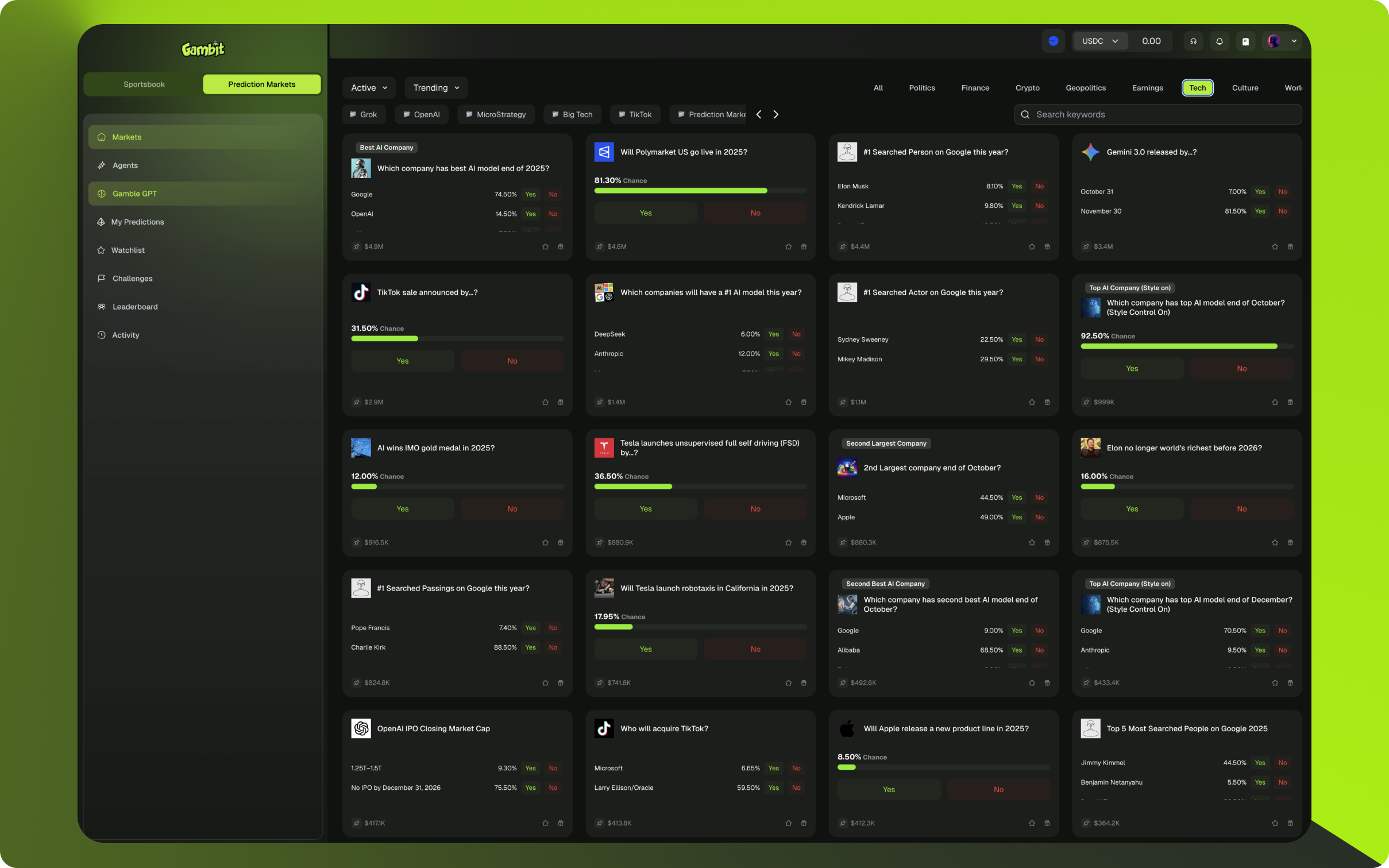
- Unified Market View: One "market card" pattern carries the critical information (live odds, a clear Yes/No action and return previews), so users switch between categories like sports and crypto without relearning the interface.
The guided setup and deliberate review steps are examples of the interaction work I bring to AI product design and integration. The service workflow explains how I scope, prototype and evaluate those experiences with a team.
Research & Problem Solving
The design strategy built on the rise of AI agents and DeFi and kept simplicity, personalization, trust and speed at the centre of every decision.
- Problem: How do you make complex AI training accessible?
- Solution: A modular workflow with smart defaults and guided training options turned a complex configuration task into a few simple choices.
- Problem: How do you get users to trust an AI's predictions?
- Solution: Transparency was built in from the start. Performance leaderboards and a confidence score on every pick let users check an agent's track record before acting on its advice.
- Problem: How do you help users find value in a noisy, fast-moving market?
- Solution: The personalized dashboard was designed to surface ranked picks with visible model-confidence context. This reduced noise while preserving a deliberate review step before any action.
The Outcome
Early product telemetry gave directional evidence (not independently audited) about the guided setup and recommendation flow:
- Activation signal: users completed the agent-creation, recommendation and review journey, supporting the value of progressive disclosure.
- Automation-reliance signal: heavy use of AI-originated recommendations was treated as a risk to monitor, reinforcing the need for visible confidence context, optional detail and a deliberate review step.
Responsible design boundary
This portfolio case focuses on the information architecture and explainability of the MVP. It does not claim that production-grade wagering safeguards were shipped or validated. Before any real-money launch, age and location eligibility, visible model uncertainty, deposit and loss limits, cooling-off and self-exclusion controls, and an accessible help and referral path would be launch requirements, with legal, responsible-gaming and accessibility review.
Reflections & trade-offs
On SportsGambit, everything came down to the few seconds before someone decides to put money on the line.
We knew two things: more “AI explanation” doesn’t automatically mean more trust, and less information doesn’t automatically mean speed. The job was to design a moment where someone glances at a card and instinctively knows what the bet is, how confident the system is, and whether they’re comfortable acting on it now.
So we went decision-first, with one clear action and optional depth behind it. Speed never removed the review step; confidence signals, return context and supporting detail stayed available before action. We killed a lot of visually interesting concepts because they failed one test. Can a new user land here, understand the story in under five seconds, and still feel in control of the choice? If the answer was no, it didn’t ship.